
Some wounds never made it to a doctor. They live in the body instead, in a startle that fires too fast and a sleep that never quite arrives. June, recognized as PTSD Awareness Month, is a fitting time to stop outrunning them. Trauma can be treated, and for many people in North Georgia the hardest part is simply letting the running stop.
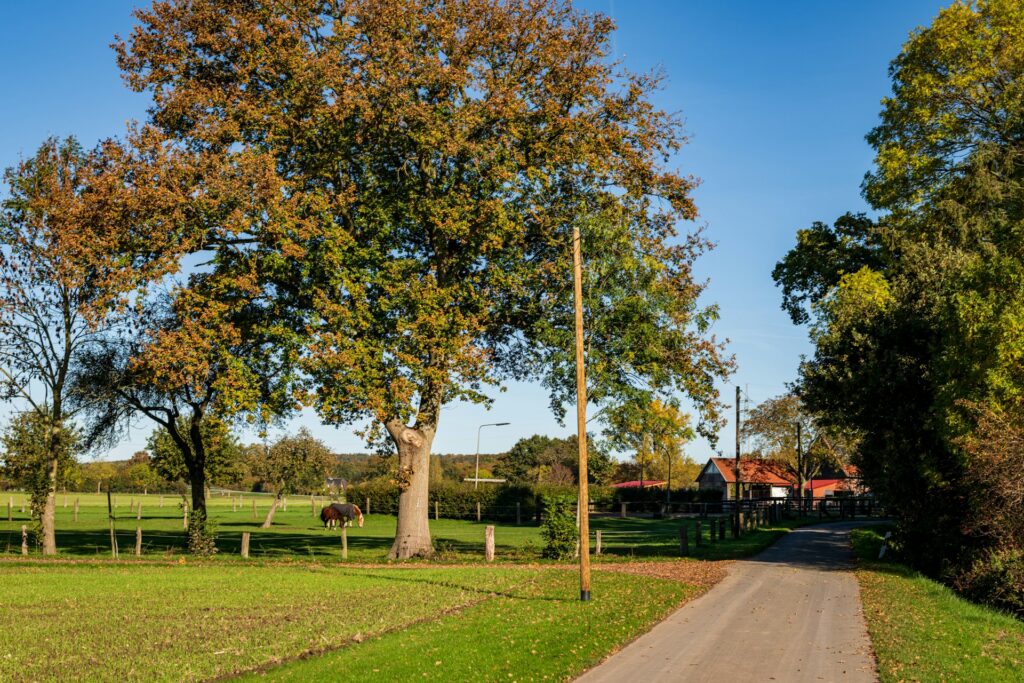
June arrives in Bartow County green and unhurried. The pastures around Kingston fill in, the Etowah River runs full, and the long light at the end of the day softens everything it touches. There is something quietly fitting about marking trauma in a season this gentle. PTSD Awareness Month runs the full month of June, with PTSD Awareness Day on June 27, and it can be the moment a person finally names symptoms they have minimized for years.
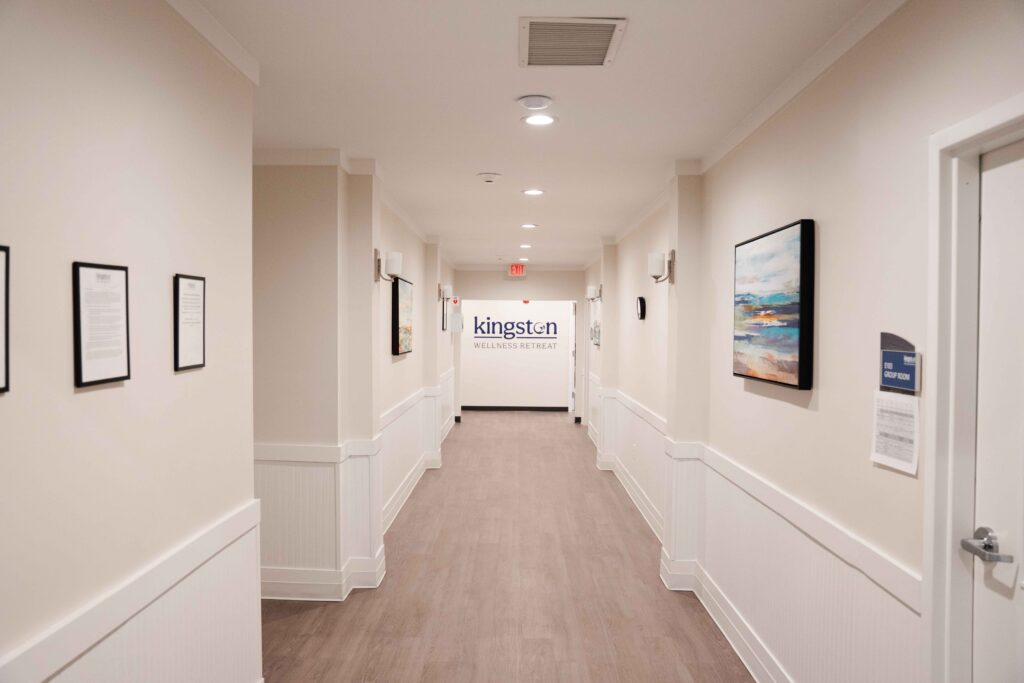
Post-traumatic stress disorder, often shortened to PTSD, is what can happen when a frightening or life-threatening experience leaves a lasting imprint on the brain and body. It is common, it is treatable, and it is far more than weakness or bad memories. If you have been carrying it, or watching someone you love carry it, you are reading the right thing. Kingston Wellness Retreat provides residential mental health treatment in Georgia on a quiet 41-bed estate where the work of trauma recovery can finally slow down enough to happen. For people whose symptoms have deep roots, PTSD treatment in Kingston is built around the idea that the setting is one support: it lowers daily stimulation while therapy, medication management when appropriate, and body-based services do the clinical work.
What PTSD Actually Is, in Plain Terms
If you have ever felt like part of you is still living inside the worst day of your life, that is not a character flaw. That is how the brain protects itself after a serious threat. PTSD develops when the alarm system that kept you safe in a dangerous moment never fully switched back off afterward. The brain keeps the danger signal running, even when the body is finally safe.
That shows up in ways most people recognize once someone names them. Nightmares that feel real. Flashbacks, which are moments when a memory hijacks the present so completely that the past feels like it is happening again. A startle response so strong that a slammed door or a car backfiring sends the whole body into high alert. Many people also pull back from the people and places that remind them of what happened, which slowly shrinks their world. The American Psychiatric Association describes these as the core symptom clusters of the disorder, and the pattern holds across very different kinds of trauma.
Trauma does not come from one source. Combat and military service, a serious car accident on I-75, an assault, a sudden loss, childhood abuse, a medical emergency, or years of living in an unsafe home can all leave the same biological fingerprint. Our overview of post-traumatic stress disorder goes deeper into how clinicians recognize it and when it is time to get help. The short version is this: if the imprint of a frightening event is still running your days and your nights, it is worth taking seriously.
Why the Nervous System Stays Stuck
The hardest part of living with PTSD is that the body does not know the threat is over. It keeps bracing for something that already happened.
Under real danger, the body floods with stress hormones and shifts into fight-or-flight, the survival mode that speeds up the heart, tightens the muscles, and narrows attention down to the threat. That response is supposed to be temporary. In PTSD, it stays switched on. The result is a body that is exhausted and wired at the same time, that cannot relax even when nothing is wrong, that sleeps poorly and reacts fast. We explain this loop in more detail in our piece on a nervous system stuck in fight-or-flight, because understanding the mechanism takes some of the shame out of it.
This is also why “just try to calm down” never works, and why telling someone to move on can feel cruel. The part of the brain that drives the alarm does not respond to logic. It responds to safety, repetition, and time. A person cannot reason their way out of a threat response that lives below conscious thought. They can, with the right support, slowly teach the nervous system that the danger has passed. That teaching is what good trauma treatment is built to do.
Why a Calm, Residential Setting Supports Trauma Healing
Here is something that gets missed in the rush to find the right therapy or the right medication: a nervous system that is still scanning for danger cannot do the deep work of healing. The environment has to feel safe first. For many people, the home environment is where the stress lives, tangled up with the relationships, the schedule, and the reminders that keep the alarm running.
That is the reasoning behind the retreat model. Kingston sits in the rural northwest corner of the Atlanta metro, about an hour from the noise of the city and ATL airport, near Cartersville and Rome. The estate is private and quiet by design. When the constant low hum of daily threat finally drops away, the body has a chance to rest and the nervous system can begin to settle. There is real science behind why open space and quiet help the brain settle, and our look at nature and neurobiology walks through how stillness supports the nervous system.
A residential setting also removes the daily decisions that drain a person already running on empty. Meals are handled. The day has a gentle structure. There is nowhere to be and nothing to perform. For someone who has spent months or years white-knuckling through work and family while quietly falling apart inside, that kind of relief is what lets the deeper healing begin. The rest of the work stands on it.
Evidence-Based Trauma Care, Held Gently
A sense of safety makes the clinical work possible, and the clinical work is where most of the change happens. Trauma treatment is most effective when proven therapies are paired with care for the body, and Kingston is set up to offer both under physician-led medical oversight, with a care plan that can be adjusted as symptoms, sleep, medications, and safety needs change.
The core of trauma recovery is talk-based therapy that helps the brain file a memory where it belongs, in the past, instead of leaving it loose in the present. Two approaches carry strong research support and anchor the clinical program:
- Cognitive Behavioral Therapy (CBT): A structured therapy that helps a person notice and reshape the thoughts that keep fear and shame alive after trauma. Our overview of CBT in Georgia explains how it works session by session.
- Dialectical Behavior Therapy (DBT): A skills-based approach, DBT teaches a person how to ride out overwhelming emotion without being swept away by it, which matters enormously when trauma has made feelings feel dangerous.
- Trauma-informed care throughout: Trauma-informed care keeps interactions predictable, collaborative, and shame-reducing, with staff focused on safety and choice, so the work does not re-create the original sense of threat.
Supporting the Body, Not Just the Story
Because trauma lives in the body as much as the mind, talk therapy alone often is not enough. Kingston pairs it with approaches that help calm the nervous system directly. Neurofeedback gives the brain real-time information about its own activity so it can gradually learn to settle into a calmer rhythm. Biosound therapy uses sound, vibration, and guided relaxation to ease the body out of a high-alert state.
Our explanation of how neurofeedback and biosound therapy retrain the brain for calm covers the mechanism in plain language. Alpha-Stim, somatic therapy, and trauma-informed yoga round out the body-based side of care. Amenities such as chef-prepared meals, a sauna, a cold plunge, and outdoor space can make the stay more comfortable, separate from the clinical treatment itself. The National Center for PTSD notes that effective treatment combines proven therapies with steady support, which is the shape of care Kingston is built to provide.
When Trauma Runs Deep, or Travels With Other Struggles
Not all trauma comes from a single terrible event. For many people, especially survivors of long-term childhood abuse or repeated harm, the wound is layered and chronic. Clinicians call this complex PTSD, and it tends to affect a person’s sense of self and their ability to trust as much as it affects their memories. It deserves a treatment approach that has time to go deep, which is one reason a residential setting fits it so well. Our resource on complex PTSD treatment speaks directly to people whose trauma started early and lasted a long time.
Trauma also rarely travels alone. It often arrives with depression, anxiety, or substance use that started as a way to quiet the alarm and became its own problem. Treating only one piece tends to leave the others free to reignite the rest. Kingston’s clinical team is set up to address co-occurring conditions, meaning two or more conditions that are present at the same time and treated together rather than in isolation. Treating them together lowers the chance that an untreated condition pulls a person back into symptoms later.
And trauma is never carried by one person alone. It reshapes marriages, parenting, and the rhythm of a whole household. The people who love someone with PTSD often spend years learning to walk on eggshells without ever being told why the floor is so fragile. Bringing the family into the healing, through family therapy in Georgia, gives everyone a shared language for what happened and a way back to each other.
Begin Trauma Healing at Kingston Wellness Retreat
If you have spent this PTSD Awareness Month wondering whether the heaviness you have been carrying, yours or someone you love, finally has a name, that recognition is worth something. Trauma responds to safety, to time, and to evidence-based care, and you do not have to assemble all of that on your own. The drive from Cartersville, Rome, or the wider Atlanta metro to our estate near the Etowah River is short, and for many people leaving the environment where the stress lives is itself the first real step. When you reach out through our admissions page, our team will review your situation, talk through what your coverage looks like, and go through what a stay at Kingston actually involves. A first conversation asks nothing of you but your questions, and it is a low-stakes way to learn what care could look like.
Frequently Asked Questions About PTSD Awareness Month
PTSD Awareness Month is observed every June, with June 27 marked as PTSD Awareness Day. The month exists to reduce stigma and to remind people that post-traumatic stress disorder is common and treatable. For many people, June is simply a prompt to stop pushing through and ask whether the symptoms they have learned to live with deserve real care.
PTSD is highly treatable. Proven therapies such as cognitive behavioral therapy, paired with body-based approaches that help calm an over-alert nervous system, can significantly reduce symptoms and, for many people, lead to lasting recovery. The goal is not just coping. It is teaching the brain and body that the danger has passed so a person can live fully again.
For deep or long-standing trauma, weekly sessions can be hard when a person returns each day to the environment where the stress lives. A residential setting like Kingston, in the quiet of Bartow County about an hour northwest of Atlanta, removes those daily pressures so the nervous system can finally settle. That safety lets the deeper clinical work happen in a focused, uninterrupted way.
Sources
- U.S. Department of Veterans Affairs, National Center for PTSD. (n.d.). PTSD: National Center for PTSD. Retrieved from: https://www.ptsd.va.gov/. Accessed on June 19, 2026.
- National Institute of Mental Health. (n.d.). Post-traumatic stress disorder (PTSD). Retrieved from: https://www.nimh.nih.gov/health/publications/post-traumatic-stress-disorder-ptsd. Accessed on June 19, 2026.
- American Psychiatric Association. (n.d.). American Psychiatric Association. Retrieved from: https://www.psychiatry.org/. Accessed on June 19, 2026.
- National Alliance on Mental Illness. (n.d.). NAMI. Retrieved from: https://www.nami.org/. Accessed on June 19, 2026.