These two get used as synonyms and they are not remotely the same thing. The difference decides who is admitted, for how long, who chooses, and what actually happens each day.
- Psychiatric hospitalization: For acute crisis. Days. Frequently a locked unit. The goal is safety and stabilization.
- Residential treatment: For sustained recovery. Weeks. Voluntary and unlocked. The goal is treating the condition rather than containing the emergency.
- Who decides: A hospital admission can be involuntary under state law. Residential admission is always voluntary; a person chooses it and can leave.
- The usual sequence: Hospital first when there is immediate danger, residential afterward. They are complementary rather than competing.
- The most common error: Treating a discharge from the hospital as the end of treatment. That gap is where most readmissions come from.
The vocabulary problem here has real consequences. A family hears “inpatient” and pictures a locked ward, so they rule out the residential option that would actually help. Or someone leaves a five-day hospital stay believing they have had treatment, when what they have had is stabilization, and three months later they are back in the same emergency department.
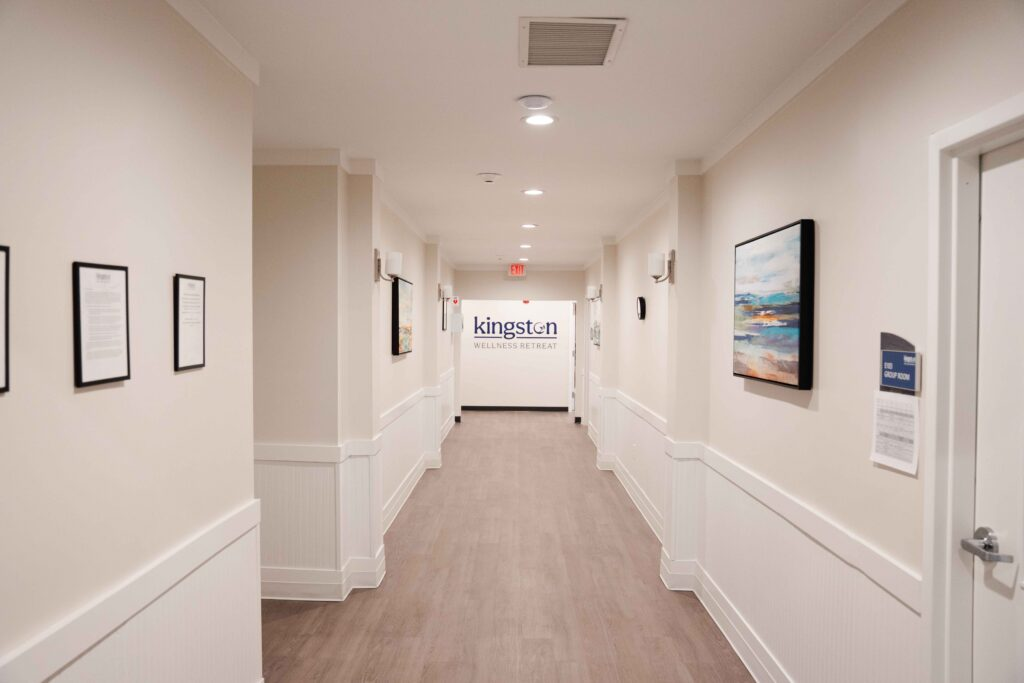
Kingston Wellness Retreat provides residential mental health treatment for adults on a quiet estate in Bartow County, an hour northwest of Atlanta. We field this confusion regularly, from people who have just been discharged and from people who are trying to avoid a hospital altogether. The distinction is worth ten minutes of anybody’s time.
What a Psychiatric Hospital Is Built For
An inpatient psychiatric unit exists to keep someone alive and get them out of immediate danger. That is a specific and necessary job, and it does it well.
Admission is triggered by acute risk: active suicidal intent, psychosis that has made someone unable to keep themselves safe, a manic episode that has stopped responding to anything, or a medical situation intertwined with a psychiatric one. The environment is built for that. Units are frequently locked. Personal items are restricted. Observation is close, sometimes continuous.
Length of stay is measured in days, and it is driven by whether the acute risk has resolved. A person is discharged when they are no longer in immediate danger, which is a much lower bar than being well. That is not a criticism of hospitals; it is what the level of care is designed and funded to do.
Admission can also be involuntary. Georgia, like every state, has a legal process for emergency evaluation and involuntary treatment when someone presents an imminent risk to themselves or others. The specifics are a legal matter and nothing here is legal advice, but the existence of that pathway is part of why the word inpatient frightens people.
What Residential Treatment Is Built For
Residential treatment starts from a different premise. It assumes the person is not in immediate danger and asks what it would take to actually change the condition.
A person lives at the facility for a stretch of weeks. The day is organized around clinical work rather than fitted around a job and a school run, and that change in ratio is the mechanism rather than the setting. It is voluntary. Residential admission is voluntary. People bring their own things, sleep in a bedroom, and are free to go. Nobody is held.
The content is different in kind, not just in duration. Individual therapy with a master’s-level clinician. Group work. Psychiatric care with medication managed under daily observation rather than assessed at quarterly appointments. Family therapy, because a household reorganizes itself around a serious illness and needs its own repair. And the unglamorous physical work of restoring sleep, food, and routine, which a hospital stay is too short to touch.
Side by Side: Residential Treatment vs Psychiatric Hospitalization
- Purpose: A hospital resolves an emergency. Residential treats the underlying condition.
- Duration: Days versus weeks.
- Setting: A clinical unit, frequently locked, versus a residence a person lives in.
- Consent: Hospitalization can be involuntary under state law. Residential admission is always voluntary.
- Therapy intensity: Limited during a hospital stay, because the priority is stabilization. Central in residential, where it is most of the day.
- Medication: Started or urgently adjusted in hospital. Refined over weeks in residential, with time to judge whether it is working.
- Family involvement: Usually visiting hours in hospital. A scheduled clinical component in residential.
- Discharge criterion: No longer in immediate danger, versus meaningful and durable progress with a step-down plan attached.
The Gap Between Them, Which Is Where Things Go Wrong
Here is the failure mode worth naming plainly, because it is so predictable.
Somebody is hospitalized after a crisis. They stabilize over five days. Get discharged with a prescription and an appointment in six weeks. They go home to the same house, the same pressures, and the same conditions that produced the crisis, with the medication only just starting and nothing else changed at all. The crisis was resolved; the illness was not touched.
That six-week gap is where a large share of readmissions live. Residential treatment is what belongs in it, and the reason it is so often skipped is partly the vocabulary confusion this page exists to fix and partly that nobody hands a family a map on discharge day.
If somebody in your household has been hospitalized more than once in a year, that pattern is itself the signal. Repeated stabilization without anything holding between episodes means the level of care after the crisis has been insufficient, not that the person is beyond help.
Which One a Situation Calls For
The question is not which is better. It is which one matches where a person currently is.
A Hospital, Now, If
- There is immediate danger. Active intent to end one’s life, or a plan and the means. This is an emergency: call 911, or call or text 988 for the Suicide and Crisis Lifeline.
- Psychosis has made someone unable to stay safe. Not being able to recognize danger, meet basic needs, or distinguish what is happening.
- A medical emergency is entangled with it. An overdose, severe withdrawal, or a physical condition requiring hospital-level care.
Residential, If
- The acute danger has passed but nothing is stable. The classic post-discharge position, and the one residential care exists for.
- Outpatient care has plateaued. Two or three medications tried properly, each given long enough to show what it could do, and the picture has not improved.
- Functioning has come apart in a pattern. Sleep, meals, hygiene, and work unreliable over weeks rather than on a bad day.
- The home environment is part of the problem. Sometimes what a person most needs is several weeks somewhere the daily architecture of the illness does not reach.
- Substance use has joined the picture. Where both are present, dual diagnosis care addresses them together rather than in sequence.
The one-line version: if the question is whether someone will survive tonight, that is a hospital question. If the question is whether they will be better in three months, that is a residential one.
What Residential Looks Like at Kingston
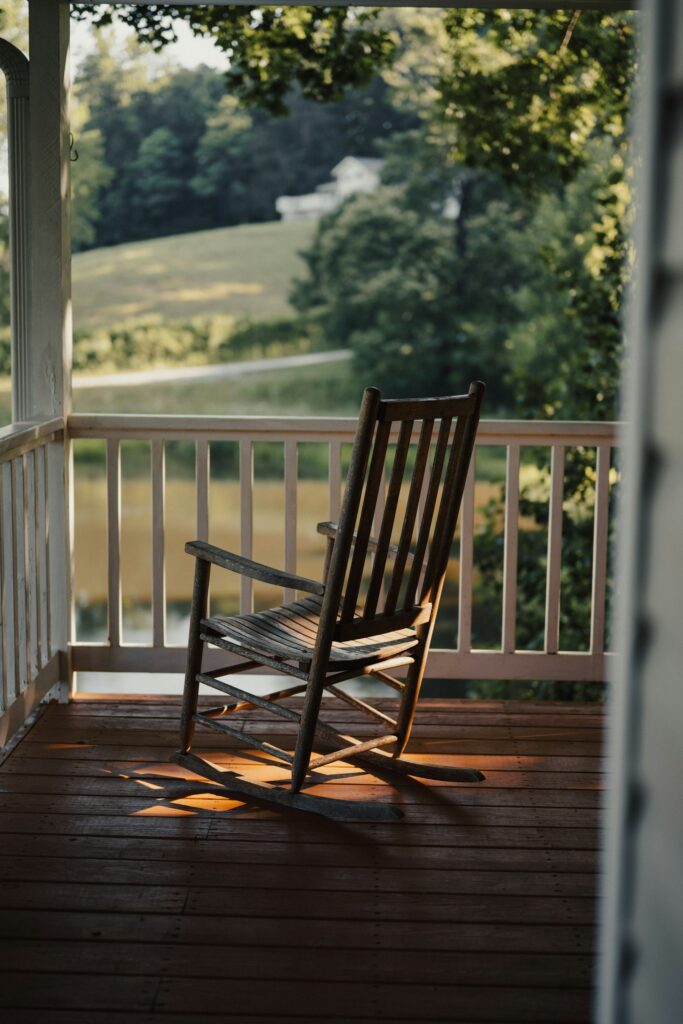
Kingston Wellness Retreat sits on a quiet property in Bartow County, up US-411 from Cartersville and about an hour northwest of Atlanta on I-75. The setting is a deliberate clinical choice rather than a flourish. A nervous system that has been running hot for months responds to quiet and to space in ways that are measurable, and there is a real difference between recovering in a building beside an interstate and recovering somewhere the loudest thing is the weather.
Days run on cognitive behavioral therapy, which works on thought patterns that have hardened into rules a person stopped examining, and dialectical behavior therapy, which teaches distress tolerance, meaning concrete things to do when a feeling arrives faster than reasoning can catch it. Neurofeedback and biosound therapy work directly on a nervous system stuck in a state of alarm. Genetic testing narrows which medications a person is likely to tolerate rather than working through them one at a time over a year.
Conditions treated include complex PTSD, depression, severe anxiety, bipolar disorder, and suicidal ideation that persists without immediate intent.
Working Out Which Level Fits
If you are reading this after a hospital discharge, or trying to avoid a hospital, the useful next step is an assessment rather than more comparison. A clinician hears what has actually been happening and says plainly whether residential care fits, whether outpatient treatment would serve, or whether the situation needs stabilization first. Being told a lower level of care is right is a good outcome, not a wasted call. Family members phone and ask their own questions before the person in question is involved, which is a normal way to begin. Reach the Kingston Wellness Retreat admissions team and we will go through benefits and what an arrival day looks like. If somebody is in immediate danger tonight, call 911, or call or text 988, before anything else.
Learn More: The Differences Between a Psych Ward vs Mental Hospital
FAQs About Residential Treatment vs Psychiatric Hospitalization
No. Residential treatment is voluntary. Adults arrive because they choose to, keep their belongings, sleep in a bedroom rather than a ward, follow a structured daily schedule, and can leave. Involuntary commitment is a legal process that applies to emergency psychiatric hospitalization when someone presents an imminent risk, and it is a different pathway entirely under state law. The word inpatient covers both, which is the source of most of the confusion and the reason a lot of families rule out the option that would help them.
Often, yes, and this is the most common situation we see. A hospital stay resolves the acute danger and is measured in days; it does not by itself change the condition or the circumstances a person returns to. Discharge with a prescription and an appointment six weeks out leaves a long gap, and that gap is where a large share of readmissions come from. If someone has been hospitalized more than once in a year, that pattern is the signal that the level of care afterward has been insufficient.
Weeks rather than days, with the specific length driven by clinical progress alongside coverage review. It is set collaboratively between the clinical team, the person, and the insurer rather than fixed in advance, and it can change during treatment. Because admission is voluntary, a person can also choose to leave, though that decision is worked through with the team rather than treated as a formality. Discharge planning includes the step down into outpatient care rather than ending at the door.
That is common and it is not the end of the conversation. Because residential admission is voluntary, nobody can be placed against their will, but families frequently find the refusal softens once there is a concrete option to discuss rather than an abstract demand. A useful first move is to call and get the information yourself, so that when the moment comes you have a real answer ready rather than three days of research ahead of you. If the person is in immediate danger, that is an emergency and 911 or 988 comes first.
Sources
- National Institute of Mental Health. (n.d.). Mental illness statistics. Retrieved from: https://www.nimh.nih.gov/health/statistics/mental-illness. Accessed on September 15, 2026.
- National Institute of Mental Health. (n.d.). Suicide prevention. Retrieved from: https://www.nimh.nih.gov/health/topics/suicide-prevention. Accessed on September 15, 2026.
- National Institute of Mental Health. (n.d.). Schizophrenia. Retrieved from: https://www.nimh.nih.gov/health/topics/schizophrenia. Accessed on September 15, 2026.
- Georgia Department of Behavioral Health and Developmental Disabilities. (n.d.). 988 in Georgia. Retrieved from: https://dbhdd.georgia.gov/be-dbhdd/988-georgia. Accessed on September 15, 2026.
- 988 Suicide & Crisis Lifeline. (n.d.). What to expect when you call. Retrieved from: https://988lifeline.org/get-help/what-to-expect/. Accessed on September 15, 2026.
- Substance Abuse and Mental Health Services Administration. (n.d.). Co-occurring disorders. Retrieved from: https://www.samhsa.gov/substance-use/treatment/co-occurring-disorders. Accessed on September 15, 2026.