
International Self-Care Day on July 24 is a good reason to look past the version of self-care that gets sold to us and toward the daily habits that genuinely steady a mind under strain.
Clinically reviewed by the Kingston Wellness Retreat clinical team · July 2026
Self-care has been flattened into a marketing term. It shows up on candles, weekend getaways, and things we are told to buy. For anyone living with depression, anxiety, or the aftermath of trauma, that version can feel out of reach, or even a little insulting. The self-care that actually holds a nervous system together is quieter and less expensive than any of that.
For the person working through a mental-health condition, and for the family member reading this and wondering how to help, self-care is not a reward you earn once you feel better. It is part of how you get better. The same building blocks that anchor a day of holistic mental health care, sleep, movement, food, connection, and a way to calm the body, are the ones you can start protecting at home. When symptoms grow heavier, those same habits become the structure inside residential mental health treatment.
What Self-Care Actually Means for Mental Health
If you have been telling yourself you are bad at self-care, it helps to know what it is really asking of you. The National Institute of Mental Health describes caring for your mental health in plain, unglamorous terms: move your body, get enough sleep, eat regular meals, stay connected to people, and find small ways to relax and set priorities. None of that requires money or a free weekend.
Think of self-care as the maintenance layer underneath treatment. Medication, therapy, and time do the heavy lifting on a diagnosis. Self-care is what keeps the ground from shifting while that work happens: a steady sleep window, a short walk, a meal you did not skip, one honest conversation. On the hardest days, it can be as small as drinking a glass of water and stepping outside for five minutes.
It also has limits, and naming them early is a kindness. Self-care can steady a mood and soften the edges of a bad week. It cannot, on its own, treat major depression, a trauma disorder, or bipolar illness. Holding both of those truths at once is the honest place to start.
Self-Care Ideas That Support Your Mental Health
These are self-care practices with real support behind them for mood, stress, and mental health. Start with one. Stacking all of them at once is its own kind of pressure.
- Move your body a little every day: NIMH points to even 30 minutes of walking to lift mood and energy. On low days, a couple of short walks count just as much as one long one.
- Protect your sleep: Keep a steady sleep and wake time, even on weekends. Sleep and mood run on the same wiring, and guarding your sleep window is one of the highest-return things you can do.
- Eat regular meals and drink water: Skipped meals and quiet dehydration amplify anxiety and irritability. Simple, regular meals steady blood sugar and steady mood along with it.
- Build in one calming practice: Slow breathing, stretching, prayer, mindfulness, or time outside all send the body the same message that it is safe to settle.
- Stay connected: A short text, a phone call, or sitting quietly with someone all count. Isolation tends to deepen depression; small moments of contact interrupt it.
- Set one small, reachable goal: Make the bar low enough that you can clear it, then let clearing it be the win instead of the whole to-do list.
- Notice one good thing: Writing down a single thing that went right nudges attention away from the constant scan for what is wrong.
Calming a Nervous System That Will Not Settle
When anxiety is running high, being told to relax can feel almost cruel. The goal is not to force calm on demand; it is to give the body small, repeatable signals that it is safe. That is the real work of stress management, and it is a skill that gets stronger with practice rather than a mood you either have or you do not.
Mindfulness, the practice of paying attention to what is happening right now without judging it, is one of the most studied of these skills. In people working to prevent a return to substance use, a review of nine randomized trials found that a structured program called mindfulness-based relapse prevention can modestly reduce cravings and withdrawal symptoms (Grant et al., 2017). The effect was small but real, and later reviews reached similar, carefully worded conclusions (Ramadas et al., 2021).
What that research points to matters for mental health too. The core skill, noticing a hard feeling without being run by it, is why clinicians fold mindfulness, breathing, and body-based work into treatment for anxiety, depression, and trauma. For a nervous system stuck in fight-or-flight, these practices are a way to tell the body, gently and over and over, that the danger has passed.
Connection Is a Form of Self-Care
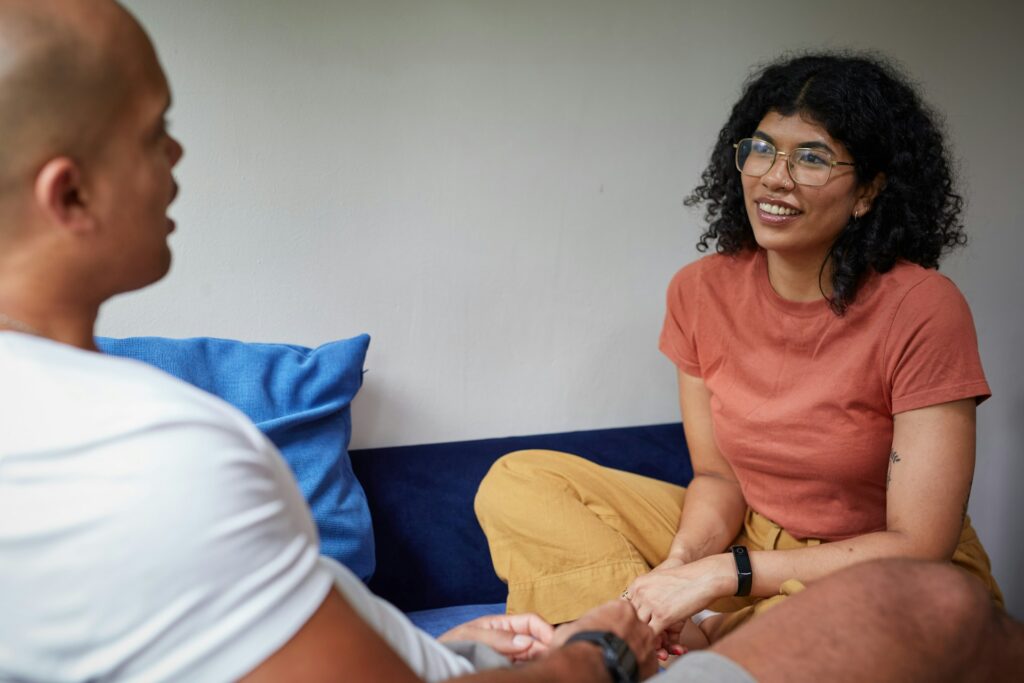
The item that gets left off most self-care lists is other people. When you are low, connection is the first thing that goes and the last thing you feel like reaching for. That is exactly when it matters most.
The link between connection and health is not soft science. The Centers for Disease Control and Prevention describes social connection as protective for both mental and physical health, and isolation as a genuine risk to it. You do not need a wide circle to benefit. A few steady relationships, checked on regularly, do more than a crowd of acquaintances ever will.
This is also where the people around a struggling person carry real weight. If you are the one watching someone you love pull away, your steady presence is not nothing; it is part of their care. Structured versions of this live inside treatment, through family therapy that helps a household talk to each other again, and group therapy where people in similar shoes remind one another they are not alone in it.
When Self-Care Is Not Enough on Its Own
Here is the line that keeps self-care honest: it supports treatment, and it does not replace it. If someone is sleeping all day or barely at all, losing weight, pulling away from everyone, or having thoughts of not being here, no walk or gratitude list is the answer. Those are signals for professional care, not a cue to try harder.
Some seasons of a mental-health condition need more structure than a home routine can hold. A residential program builds that structure on purpose: predictable days, real sleep, prepared meals, movement, and hours of clinical work, all in one quiet place set apart from the pressures that keep a nervous system on alert. For many people, the retreat model of care is less a last resort than a reset, a chance to rebuild the basics with support before carrying them home.
Finding Support at Kingston Wellness Retreat
If the honest read is that self-care alone is not holding anymore, whether that is your own experience or what you are watching in someone you love, that is worth taking seriously rather than waiting out. Kingston Wellness Retreat offers residential mental-health care in a quiet setting built for both rest and real clinical work, the kind of deep reset that is hard to create at home. Our admissions team can talk you through what care looks like, what your insurance may cover, and whether this is the right fit, with no pressure to decide today. You can start that conversation through our Kingston Wellness Retreat admissions page. When you are ready, we are here.
Frequently Asked Questions About Building a Self-Care Routine
The most reliable ones are also the least glamorous: daily movement such as a short walk, a steady sleep schedule, regular meals and water, one calming practice like slow breathing or mindfulness, staying connected to a few people, and setting one small goal you can actually reach. The National Institute of Mental Health groups these same basics under caring for your mental health. Start with one, not all seven.
Self-care can ease symptoms and steady a hard week, and it tends to make treatment work better. It does not replace treatment for a diagnosed condition. If depression or anxiety is affecting your sleep, work, relationships, or sense of safety, that is a sign to reach for professional care, therapy, psychiatric support, or a higher level of care, alongside the daily habits rather than instead of them.
Low motivation is often a symptom, not a character flaw, and the usual advice to just push through tends to backfire. Shrink the task until it is almost too small to refuse: one glass of water, one song’s worth of stretching, one step onto the porch. Attach it to something you already do, and let the small win count. If getting out of bed itself feels impossible most days, treat that as information worth sharing with a professional.
Sources
- National Institute of Mental Health. (n.d.). Caring for your mental health. Retrieved from: https://www.nimh.nih.gov/health/topics/caring-for-your-mental-health. Accessed on July 14, 2026.
- Grant, S., Colaiaco, B., Motala, A., Shanman, R., Booth, M., Sorbero, M., & Hempel, S. (2017). Mindfulness-based relapse prevention for substance use disorders: A systematic review and meta-analysis. Journal of Addiction Medicine, 11(5), 386–396. Retrieved from: https://www.ovid.com/jnls/journaladdictionmedicine/fulltext/10.1097/adm.0000000000000338~mindfulness-based-relapse-prevention-for-substance-use. Accessed on July 14, 2026.
- Ramadas, E., Lima, M. P. de, Caetano, T., Lopes, J., & Dixe, M. dos A. (2021). Effectiveness of mindfulness-based relapse prevention in individuals with substance use disorders: A systematic review. Behavioral Sciences, 11(10), 133. Retrieved from: https://www.mdpi.com/2076-328X/11/10/133. Accessed on July 14, 2026.
- Centers for Disease Control and Prevention. (n.d.). Social connection. Retrieved from: https://www.cdc.gov/social-connectedness/about/index.html. Accessed on July 14, 2026.
- The American Institute of Stress. (n.d.). The American Institute of Stress. Retrieved from: https://www.stress.org/. Accessed on July 14, 2026.