Florida has no shortage of treatment centers. What it has less of is a quiet, low-stimulation residential setting, and for some conditions that is not a preference. Florida has more behavioral health capacity per head than almost anywhere in the country, and a great deal of it is excellent. It is also a landscape shaped overwhelmingly by addiction treatment, which is not the same problem, and by an industry whose marketing has made a lot of families understandably wary.
Kingston Wellness Retreat provides residential mental health treatment for Florida adults on a quiet property in Bartow County, Georgia. It is a primary mental health program rather than a rehab, and Florida is one of the regions we serve. Whether you are the person who has been holding this together or the family member who has been researching for weeks, the distance is the first thing worth being straight about.
Why Some Florida Families Look Out of State
There are three reasons that come up repeatedly, and none of them is that Florida lacks providers.
The first is what kind of program is available. Florida’s residential capacity skews heavily toward substance use treatment. A person who has PTSD as a result of complex trauma, treatment-resistant depression, or bipolar disorder without a substance component frequently finds the options thin, and being placed in a program built around addiction when addiction is not the issue is a poor fit for everyone in the room.
The second is privacy. Florida’s professional and social worlds are smaller than the population suggests, particularly in South Florida, and people who have built careers and reputations have a rational reason to want treatment that does not become known. Leaving the state is not the only way to protect that, and it should not be the deciding factor by itself. For some adults it is nonetheless the thing that finally makes treatment feel possible.
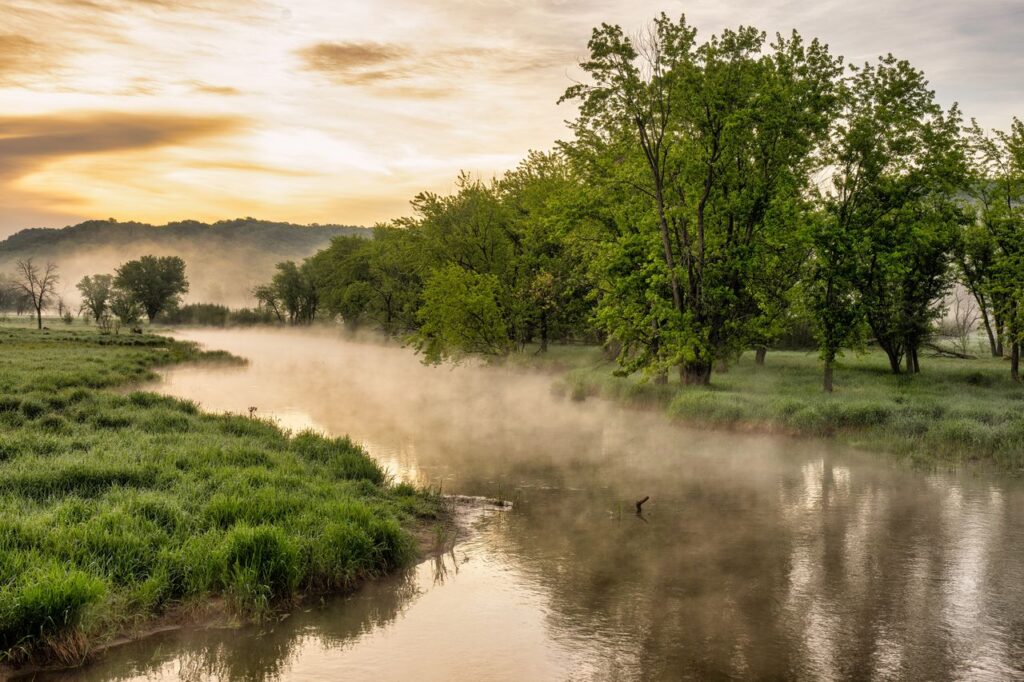
The third is the environment itself. This one sounds soft and is not. A nervous system that has been running on alarm for months responds to quiet and to space in ways that are measurable, and there is a real difference between doing this work in a coastal city and doing it somewhere the loudest thing is weather in the trees. There is also the plain matter of seasons. Some people find that a year of unbroken heat and light works against them, and the North Georgia autumn does something a Florida one does not.
Getting Here
Most Florida families fly. Miami, Fort Lauderdale, Tampa, Orlando, and Jacksonville all connect to Hartsfield-Jackson in under two and a half hours in the air, and Kingston is about an hour northwest of the airport, up I-75 and out on US-411 past Cartersville.
Driving is a real day. Jacksonville is the shortest at around six hours. Tampa and Orlando run seven to eight. Miami is roughly ten. Families sometimes fly the person up and drive a car separately, which is worth considering if a stay is going to run several weeks.
Distance is not treated here as pure cost, and this is the part worth sitting with. A mental health condition installs itself in a specific life: the same rooms, the same commute, the same three people whose messages set everything off, the same late-evening spiral in the same chair. A flight is enough separation for a nervous system to stop bracing, and modern family sessions do not require everyone in the same room. It is still a genuine disruption, and it should be weighed as one.
What the Retreat Model Actually Means
The word retreat is doing real work here rather than decorating a brochure. The retreat model is a clinical position: that the physical environment is part of the treatment, not the container it happens in.
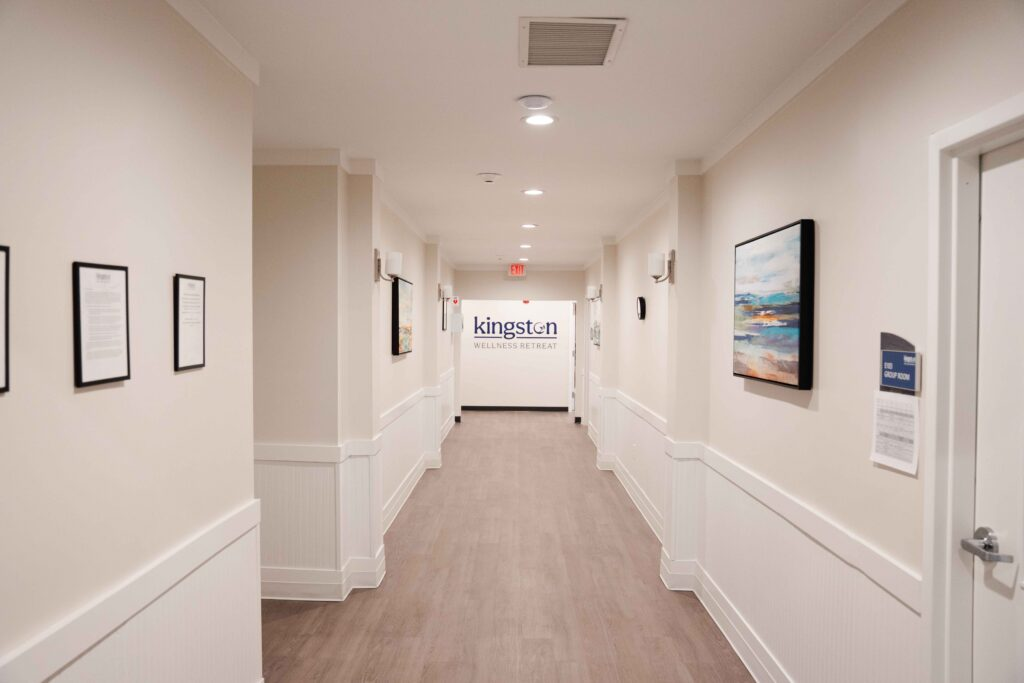
In practice that means a quiet property rather than a clinical building, a smaller and more reflective setting than a large campus, and a daily rhythm that has space in it. The comforts are treated as clinical rather than as perks. A private chef, a gym, a sauna and cold plunge, a theater, and trauma-informed yoga exist because physical calm and dignity make hard therapeutic work possible, and an adult who feels treated like a person participates differently from one who feels processed.
Underneath the setting the clinical work is conventional and evidence-based. Cognitive behavioral therapy goes after the beliefs that have quietly become rules nobody questions any more. Dialectical behavior therapy focuses on distress tolerance, which is the skill of riding out an unbearable moment without acting on it. Neurofeedback and biosound therapy work on a nervous system stuck in a state of alarm. Psychiatric care runs alongside, with genetic testing narrowing which medications a body is likely to tolerate rather than working through them one at a time over a year.
Who It Is For
Kingston treats adults with primary mental health conditions: depression including the treatment-resistant kind, severe anxiety, PTSD and complex trauma, bipolar disorder, and suicidal ideation that persists without immediate intent. Where substance use is also present, dual diagnosis care addresses both.
It is voluntary and unlocked. Admission is voluntary, the door is not locked, and residents keep their own clothes and belongings in a bedroom rather than a hospital bay. It is not an emergency department and it is not a commitment. If somebody is in immediate danger right now, that is an emergency and belongs with 911 or the 988 Suicide and Crisis Lifeline; stabilization comes first, and residential care is what comes after.
It is also not right for everyone, and it would be dishonest to pretend otherwise. For most Florida adults the appropriate answer is care closer to home, and an honest assessment will say so. Florida’s Department of Children and Families coordinates publicly funded mental health and substance use services through regional managing entities, and local crisis services and 988 come first in an acute situation.
Coverage From Out of State
Network status follows the plan rather than the map. Kingston Wellness Retreat is in-network with Optum and UBH. Out-of-network arrangements are accepted with other carriers, and for HMO and EPO plans a single case agreement may be attempted, which is a negotiated one-off arrangement rather than a guarantee.
Federal parity law requires most plans that cover mental health benefits to apply comparable rules to them as to medical and surgical care, which is the legal backdrop to why residential mental health treatment is a covered benefit at all. It does not make plans identical, and out-of-network coverage in particular varies enormously. Our admissions team reads your specific policy and tells you what it covers, and what your realistic out-of-pocket exposure looks like, before an assessment rather than after.
From Florida, Start With Whether This Fits at All
The decision worth making first is not about flights. It is whether residential care is proportionate to what has been happening and whether this particular program is the right kind, which a clinician can work through in one conversation. Sometimes the answer is that the setting and the fit are worth the journey. Sometimes it is that something in Florida serves better, and we will say so plainly rather than talk you into a plane ticket. Family members call and ask their own questions first, before the person in question is involved, which is a reasonable way in. Reach the Kingston Wellness Retreat admissions team and we will go through benefits, travel, and what arriving actually involves. If someone is in danger tonight, call 911 or 988 first.
FAQs About Residential Mental Health Treatment for Florida Adults in Georgia
Usually for one of three reasons. Florida’s residential capacity skews heavily toward substance use treatment, so a person whose problem is primary mental health can find the options thinner than the raw provider count suggests. Privacy matters in professional worlds that are smaller than the population implies. And the environment itself is part of the treatment for some conditions, particularly where a nervous system has been running on alarm for months. None of those applies to everyone, and an assessment will say if care closer to home fits better.
Most fly. Miami, Fort Lauderdale, Tampa, Orlando, and Jacksonville all reach Hartsfield-Jackson in under two and a half hours in the air, and Kingston is about an hour northwest of the airport up I-75 and out on US-411 past Cartersville. Driving is a real day: roughly six hours from Jacksonville, seven to eight from Tampa or Orlando, and around ten from Miami. Some families fly the person up and drive a car separately when a stay will run several weeks.
It depends on the plan rather than the state line. Kingston Wellness Retreat is in-network with Optum and UBH. Out-of-network arrangements are accepted with other carriers, and for HMO and EPO plans a single case agreement may be attempted, which is a negotiated one-off rather than a guarantee. Out-of-network coverage varies enormously between policies, so the admissions team reads yours specifically and gives you a realistic picture of out-of-pocket exposure before an assessment.
No. Kingston is a primary mental health program treating depression, anxiety, PTSD and complex trauma, bipolar disorder, and persistent suicidal ideation. Where a substance use problem is present alongside a mental health condition, dual diagnosis care addresses both together. But somebody whose primary need is medically supervised withdrawal or addiction-focused residential treatment would be better served elsewhere, and an assessment will say so rather than admitting a poor fit.
Sources
- Florida Department of Children and Families. (n.d.). System of services and support. Retrieved from: https://www.myflfamilies.com/services/samh/treatment-services/AMH/system-of-services-and-support. Accessed on September 13, 2026.
- National Institute of Mental Health. (n.d.). Mental illness statistics. Retrieved from: https://www.nimh.nih.gov/health/statistics/mental-illness. Accessed on September 13, 2026.
- National Institute of Mental Health. (n.d.). Post-traumatic stress disorder (PTSD). Retrieved from: https://www.nimh.nih.gov/health/publications/post-traumatic-stress-disorder-ptsd. Accessed on September 13, 2026.
- National Institute of Mental Health. (n.d.). Bipolar disorder. Retrieved from: https://www.nimh.nih.gov/health/topics/bipolar-disorder. Accessed on September 13, 2026.
- Centers for Medicare & Medicaid Services. (n.d.). The Mental Health Parity and Addiction Equity Act (MHPAEA). Retrieved from: https://www.cms.gov/marketplace/private-health-insurance/mental-health-parity-addiction-equity. Accessed on September 13, 2026.
- Florida Suicide Prevention Coalition. (n.d.). Retrieved from: https://floridasuicideprevention.org/. Accessed on September 13, 2026.