Harnessing Thermal Stress to Regulate the Nervous System and Boost Resilience
If you are seeking mental health treatment that goes beyond traditional talk therapy alone, you are not alone. At Kingston Wellness Retreat, located on a historic 11-acre estate in Kingston, Georgia, we are committed to providing evidence-based and innovative treatment approaches that support deep, structural healing. Among our most transformative clinical offerings is contrast therapy—the deliberate alternation between cold plunge immersion and sauna heat exposure.
While this practice may seem unconventional to some, the science supporting contrast therapy as a complementary mental health intervention is compelling and robust. Traditional cultures have employed thermal therapy for thousands of years, from Finnish saunas to Japanese onsen to Scandinavian ice baths. Today, modern neuroscience has revealed that deliberate exposure to thermal stress triggers physiological responses that directly support emotional regulation, stress resilience, and neurochemical balance. Here is a comprehensive look at how our luxury contrast therapy benefits and amenities are actively used to treat severe depression, anxiety, and trauma.
How Does Contrast Therapy Work in the Body?
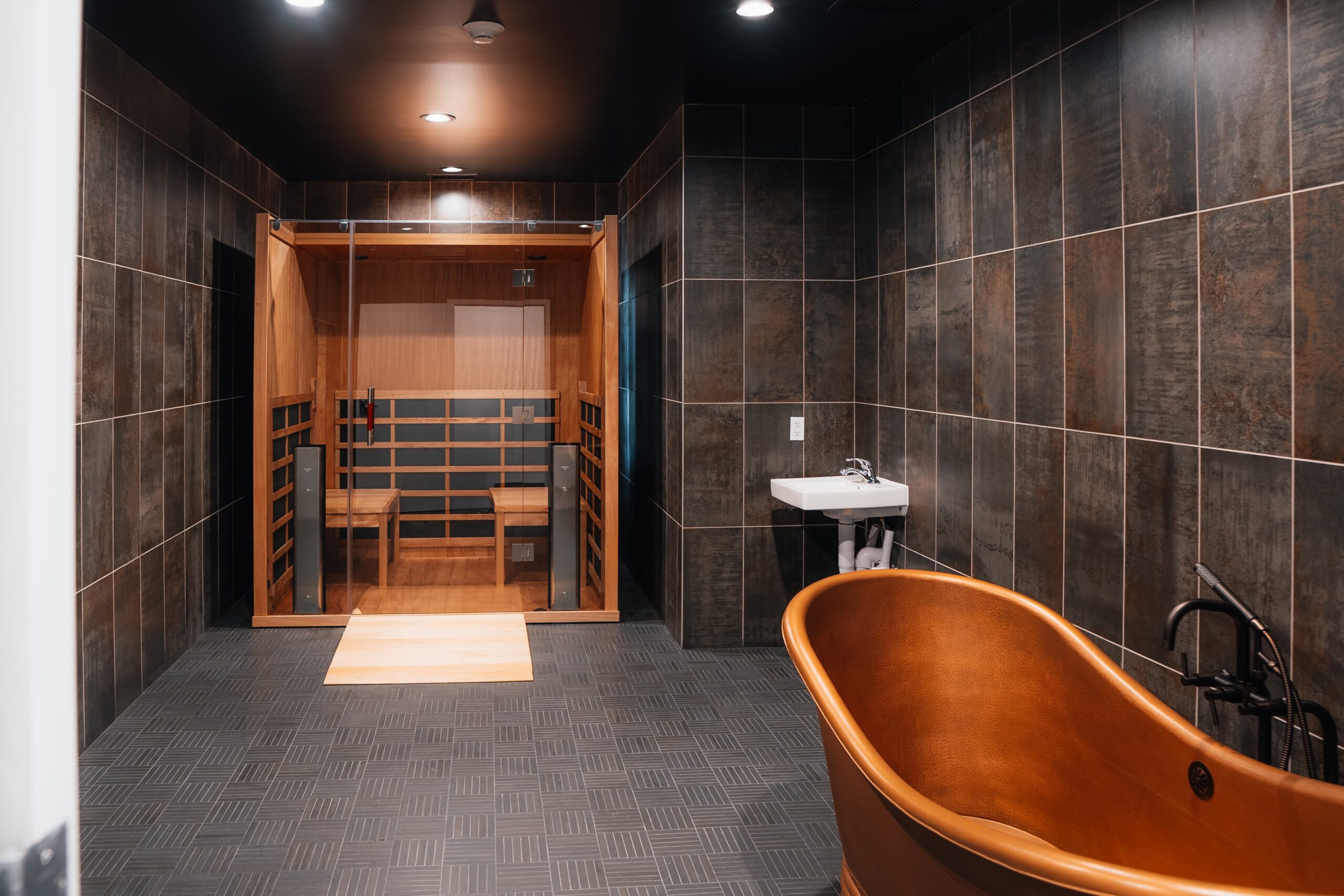
Contrast therapy works by alternating between two opposing stimuli: the intense cold of an ice plunge (typically between 41 and 59 degrees Fahrenheit) and the sustained heat of a sauna (typically between 150 and 190 degrees Fahrenheit). To appreciate why this supports mental health, we must understand how the body responds to thermal stress.
The Role of the Vagus Nerve and Vagal Tone
One of the most important physiological mechanisms at work during contrast therapy is the stimulation of the vagus nerve, the longest cranial nerve in the human body. The vagus nerve extends from the brain stem down through the neck, chest, and abdomen. It is the primary communication highway for our parasympathetic nervous system—the system responsible for “rest and digest” functions.
When you submerge yourself in cold water, you trigger the “mammalian dive reflex,” which immediately lowers your heart rate and forces the vagus nerve to activate to calm the shock of the cold. Repeatedly exercising this nerve improves your “vagal tone.” High vagal tone means your body can quickly relax after a stressful event—a critical skill for individuals recovering from PTSD or panic disorders whose nervous systems are stuck in “fight or flight.”
Norepinephrine and Mood Enhancement
Cold exposure triggers a massive, immediate release of norepinephrine (up to a 500% increase), a neurotransmitter central to mood regulation, motivation, and focus. This natural stimulant activates the sympathetic nervous system, increasing alertness and energy.
For individuals struggling with depression—often characterized by low motivation, anhedonia (inability to feel pleasure), and profound fatigue—this norepinephrine elevation provides meaningful symptom relief. The sauna phase then allows the nervous system to downregulate safely, creating a regulatory cycle that strengthens overall nervous system capacity.
Heat Shock Proteins and Inflammation
Chronic inflammation is now recognized as a primary underlying factor in many psychiatric conditions, including treatment-resistant depression. Contrast therapy, particularly the sauna phase, stimulates the production of “Heat Shock Proteins” (HSPs). These proteins repair damaged cells and trigger adaptive stress responses that ultimately reduce systemic inflammation across the body and brain. Reduced neuroinflammation correlates directly with improved mood and clearer cognitive function.
Which Mental Health Conditions Benefit From Contrast Therapy?
At Kingston Wellness Retreat in North Georgia, we integrate contrast therapy into our comprehensive residential treatment programs to target specific symptom profiles.
Depression and Anhedonia
The profound rush of endorphins (the brain’s natural painkillers) and dopamine following a contrast therapy session provides a powerful “reset” for individuals stuck in the numbness of depression. The sleep-improving effects of sauna use also directly address the insomnia that often makes depression so difficult to treat.
Anxiety and Panic Disorders
Anxiety disorders involve an overactive threat detection system (the amygdala). Controlled cold exposure teaches the brain to distinguish between true danger and false alarms. By willingly stepping into the physical discomfort of the cold plunge and using conscious breathing to calm the mind, clients practice distress tolerance. They learn, “I can experience intense discomfort, and I will survive it.” This neural adaptation translates to improved real-world stress management.
PTSD and Somatic Healing
Trauma lives in the body, often held as chronic muscle tension and bracing. The extreme heat of the sauna allows muscles to release this long-held tension, while the cold plunge forces the client to become completely present in their physical body. It is an incredibly effective somatic grounding technique for trauma survivors who frequently dissociate.
How Does Kingston Wellness Retreat Use Contrast Therapy Benefits to Help You?
At Kingston Wellness Retreat, we do not view contrast therapy as a replacement for evidence-based psychotherapy, medication, or psychiatric care. Rather, it is a powerful, holistic mental health treatment adjunct.
Safety and Medical Oversight
While contrast therapy is generally safe, our clinical team maintains rigorous protocols. Before any client utilizes our spa facilities, our medical staff conducts a thorough assessment, reviewing cardiovascular health, current medications, and individual tolerance. Contraindications include uncontrolled hypertension or certain cardiac conditions.
During sessions, our trained staff ensures clients follow proper duration guidelines and breathing techniques, keeping the stress therapeutic rather than harmful.
The North Georgia Environment
Our facility is uniquely positioned in the peaceful landscape of Bartow County. Contrast therapy fits naturally into our biophilic design philosophy. The cycle of thermal variation mirrors the Earth’s natural cycles. By deliberately practicing contrast exposure in our luxury spa, we are aligning our residents with fundamental patterns of resilience, training their bodies and brains to thrive.
Ready to Explore Deep Healing?
You do not have to face mental health challenges alone, and you do not have to rely on talk therapy as your only tool. If you are interested in exploring how contrast therapy, combined with world-class psychiatry, can support your recovery, we invite you to Kingston Wellness Retreat.
We offer residential mental health treatment in a setting of unparalleled privacy and beauty. Contact our admissions team today to learn how our innovative modalities can help you build lasting resilience.
Frequently Asked Questions About Contrast Therapy Benefits
While safe for most, individuals with a history of heart disease, uncontrolled high blood pressure, recent surgery, or pregnancy should avoid extreme temperature exposure. Our physicians conduct a thorough medical assessment before clearing any client for contrast therapy.
Your first session will be guided by our staff. You will receive instruction on breathing techniques and safety. A typical beginner session involves a warm sauna period of 10-15 minutes, followed by a brief (1-2 minute) cold plunge, and a return to the sauna. You are never pushed beyond your limits.
No. Contrast therapy is a valuable complementary modality, but it does not replace medications or psychotherapy. We integrate it into a comprehensive treatment plan to accelerate and support your overall clinical progress.
Sources
- Shevchuk, N.A. (2008). Adapted cold shower as a potential treatment for depression. Medical Hypotheses, 70(5), 995-1001. Retrieved from: https://pubmed.ncbi.nlm.nih.gov/17993252/. Accessed on February 27, 2026.
- Yankouskaya, A., et al. (2023). Short-term head-out whole-body cold-water immersion facilitates positive affect and increases interaction between large-scale brain networks. Biology. Retrieved from: https://www.ncbi.nlm.nih.gov/pmc/articles/PMC9953392/. Accessed on February 27, 2026.
- Polidori, M., et al. (2024). The influence of sauna bathing on the “totonou” state: a comprehensive assessment of physiological parameters. International Journal of Biometeorology. Retrieved from: https://www.ncbi.nlm.nih.gov/pmc/articles/PMC10681252/. Accessed on February 27, 2026.